Types of Cigar: Cigar Types Based on Size, Shape and Flavor

smoking a cigar by jay | Updated on January 19th, 2026

Cigars have been enjoyed for centuries, evolving from their origins in the Caribbean to become a global symbol of relaxation and celebration. A cigar is a tightly rolled bundle of dried and fermented tobacco wrapped in a tobacco leaf, designed to be savored slowly rather than inhaled. Whether you are new to cigars or a seasoned aficionado, this guide will help you select the perfect smoke for any occasion.


cigar

This comprehensive guide covers cigar shapes and sizes, wrapper colors, tobacco components, strength and body, flavor profiles, tobacco-growing regions, storage essentials, and beginner recommendations. Each section builds on the previous one, so by the end, you will have a complete understanding of what makes each cigar unique.

What Makes Up a Cigar

Source

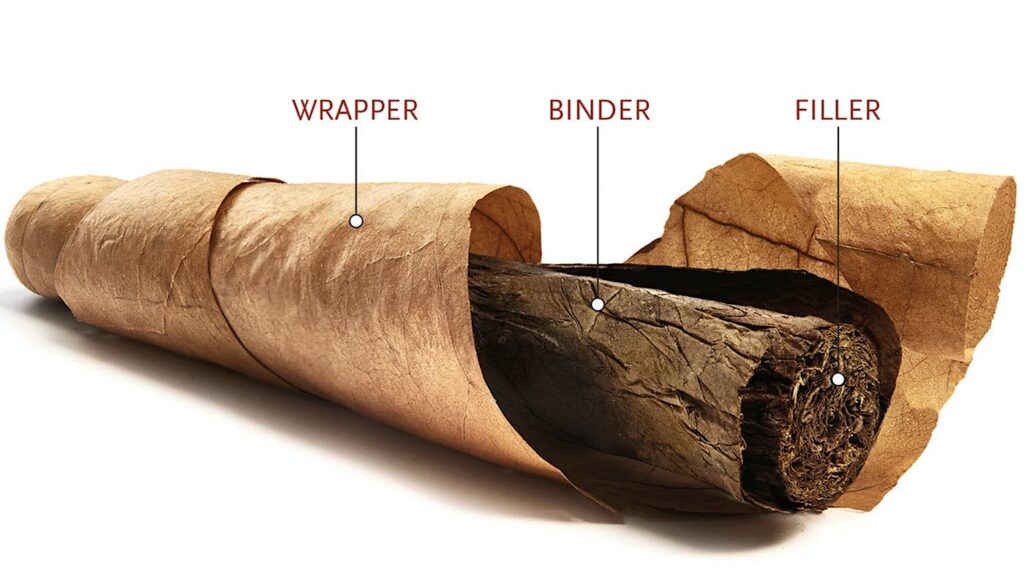
Before exploring the different types of cigars, it helps to understand what you are actually smoking. Every premium cigar consists of three essential components that work together to create the smoking experience. These components determine the cigar’s flavor, burn quality, appearance, and overall character.

Anatomy of a Premium Cigar

🍂

Wrapper

30-80% of flavor*

The outermost leaf. Creates first impression, determines appearance, and significantly influences taste. Must be visually pristine.

🔗

Binder

Structural role

Holds filler together and affects burn quality. Must complement wrapper and filler for cohesive blend.

🌿

Filler

Core strength & complexity

The cigar’s core. Provides primary strength and flavor complexity. Premium cigars use long-filler whole leaves.

*Wrapper flavor contribution varies by ring gauge: thinner cigars = more wrapper influence

The Three Components of Every Cigar

Each part of a cigar serves a specific purpose, and the quality of each component affects your smoking experience. Here is what each one does and why it matters.

Filler Tobacco

The filler forms the core of the cigar and consists of tobacco leaves that provide the primary strength and much of the flavor complexity. Premium cigars use long-filler tobacco, which means whole leaves running the length of the cigar. Machine-made cigars typically use short-filler, which consists of chopped tobacco scraps. The type of filler tobacco, where it was grown, and how it was processed all contribute to the cigar’s character. Common filler tobaccos include Nicaraguan Habano, Dominican Criollo, and Honduran varieties.

Binder Tobacco

The binder is a tobacco leaf that holds the filler together, creating the cigar’s structure. While it contributes less to flavor than the wrapper, the binder significantly affects burn quality and how evenly the cigar smokes. A good binder must complement the wrapper and filler to create a cohesive blend. Connecticut Broadleaf and Nicaraguan Habano are popular binder choices among cigar makers.

Wrapper Tobacco

The wrapper is the outermost leaf and the most scrutinized component. Industry experts debate exactly how much flavor the wrapper contributes, with estimates ranging from 30% to 80% depending on the cigar’s ring gauge and blend. Thinner cigars with smaller ring gauges have a higher wrapper-to-filler ratio, so the wrapper contributes more to the overall taste. In thicker cigars, the filler and binder have greater influence. Regardless of the exact percentage, premium wrappers must be visually pristine with minimal veins and consistent color because they create the cigar’s first impression.

How Cigars Are Made

Not all cigars are created equal. The production method affects everything from price to flavor complexity. Understanding these categories helps you know what to expect when you pick up a cigar and whether it matches your budget and taste preferences.

The Three Production Categories

Cigars fall into three main categories based on how they are manufactured. Each category offers different benefits depending on what you value most in your smoking experience.

Premium Hand-Rolled Cigars

Hand-rolled cigars represent the highest quality available. Skilled artisans called torcedores craft these cigars using only tobacco leaves for the filler, binder, and wrapper. The process requires years of training and results in cigars with superior flavor, construction, and consistency. Expect to pay more for hand-rolled cigars, but the smoking experience is significantly better than machine-made alternatives.

Machine-Made Cigars

Mass-produced using automated equipment, machine-made cigars are more affordable and widely available. They typically use short-filler tobacco and may contain paper, preservatives, or homogenized tobacco leaf wrappers. While less complex in flavor, they provide a consistent, budget-friendly option for casual smokers who want convenience without a significant investment.

Cigarillos

Cigarillos are smaller than traditional cigars but larger than cigarettes, typically offering 10 to 20 minutes of smoking time. They appeal to beginners because they are less intimidating, easier to handle, and require no cutting. While cigarillos do not offer the dramatic flavor transitions of larger cigars, they introduce core tobacco flavors in a convenient, low-commitment format.

Cigar Shapes Explained

The shape of a cigar affects more than just appearance. It influences draw resistance, burn rate, flavor concentration, and the overall smoking experience. Cigars fall into two main shape families, each with distinct characteristics that appeal to different preferences.

Parejos Are the Classic Straight-Sided Cigars

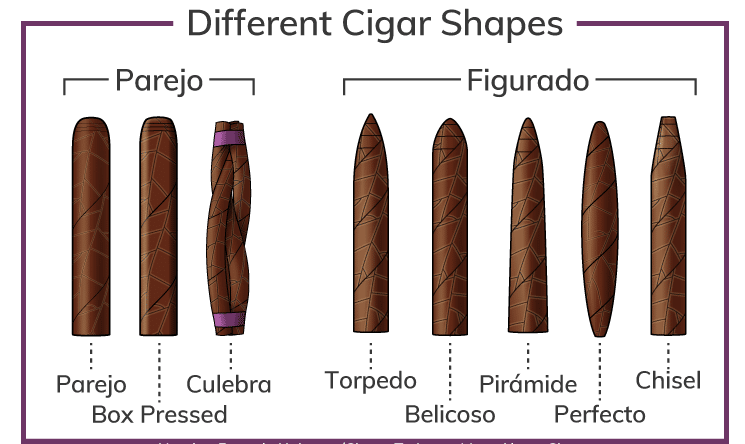
Parejos are straight-sided, cylindrical cigars with an open foot for lighting and a rounded cap for cutting. They represent the vast majority of cigars on the market and include popular sizes like Corona, Robusto, and Churchill. The name comes from the Spanish word meaning “equal,” referring to the consistent diameter from head to foot. Parejos burn evenly, are easier to manufacture consistently, and are the go-to choice for most cigar smokers.

Figurados Feature Artistic Tapered Designs

Figurados are any cigars that deviate from the standard straight-sided shape. They require greater skill to roll and often command premium prices. The tapered designs change how air flows through the cigar, which can intensify or concentrate flavors at different points during the smoke.

The most common figurado shapes include:

  • Torpedo shapes have a pointed head with a tapered body that intensifies draw and flavor concentration
  • Pyramid shapes taper from a wide foot to a pointed head, offering flavor that builds as you smoke
  • Perfecto shapes taper at both ends with a bulge in the middle, creating a unique progression of flavors
  • Belicoso shapes are similar to torpedo but with a shorter, rounder taper at the head
  • Culebra shapes consist of three thin cigars braided together, traditionally unbraided and smoked separately

Cigar Sizes and What They Mean for Your Smoke

Cigar size directly impacts how long you will smoke, how the flavors develop, and which component of the cigar dominates the taste. Understanding size measurements helps you choose the right cigar for your available time and flavor preferences.

How Cigar Size Is Measured

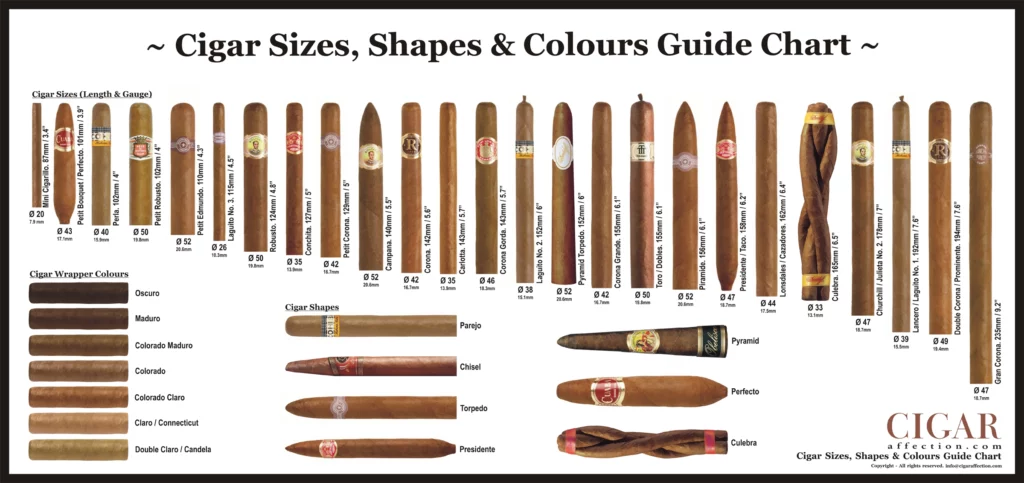
Cigar size is measured by two dimensions: length in inches and ring gauge, which is the diameter measured in 64ths of an inch. A cigar labeled “6 x 50” is 6 inches long with a diameter of 50/64 inches, or just over three-quarters of an inch. The ring gauge particularly matters because it affects the wrapper-to-filler ratio, which influences which flavors you taste most prominently.

Common Cigar Sizes at a Glance

The table below shows the most popular cigar sizes, their typical dimensions, approximate smoking times, and ideal situations for each. Smoking times are estimates based on a relaxed pace of one puff every 30 to 60 seconds.

Size NameLengthRing GaugeSmoke TimeBest For
Petit Corona4-4.5″40-4220-30 minQuick breaks, beginners
Corona5.5-6″42-4430-45 minClassic everyday smoke
Robusto4.75-5.5″48-5245-60 minMost popular, balanced
Toro6″50-5460-75 minExtended relaxation
Churchill7″47-5075-90 minLeisurely evening smoke
Double Corona7.5-8.5″49-5290-120 minSpecial occasions
Lancero/Panetela6-7.5″34-3845-60 minWrapper-focused flavor
Gordo/Gigante6″60+90+ minCool smoke, big clouds
Lonsdale6.5″42-4445-60 minElegant, refined smoke

How Size Affects Flavor

Thinner cigars with smaller ring gauges have a higher wrapper-to-filler ratio, so the wrapper’s flavor becomes more prominent. Thicker cigars allow more filler tobacco to contribute, creating greater complexity from the blend. Longer cigars allow smoke to cool before reaching your palate, producing a milder experience in the early portions. As you smoke further down, heat builds and flavors intensify regardless of size.

Cigar Wrapper Colors and Their Flavor Profiles

The wrapper is the first thing you notice about a cigar, and its color tells you a lot about what to expect. However, one common misconception deserves immediate correction: darker wrappers do not automatically mean stronger cigars. The filler tobacco determines strength, while the wrapper primarily affects flavor character.

The Seven Standard Wrapper Shades

Wrapper color ranges from pale green to jet black, with seven standard classifications on what cigar experts call the Colorado scale. Color results from tobacco variety, growing conditions such as sun versus shade exposure, harvesting time, and fermentation duration.

Color NameAppearanceFlavor Profile
Double Claro (Candela)Light greenGrassy, herbal, mild with notes of green tea and light pepper. Quick-dried to lock in chlorophyll.
ClaroLight tan/goldenVery mild, creamy, subtle. Shade-grown under cheesecloth to protect from sun. Allows filler flavors to dominate.
Colorado Claro (Natural)Light brownFruity, sweet, aromatic. Sun-grown and matured longer. Also called English Market Selection.
ColoradoMedium reddish-brownFull-bodied but soft, rich and balanced. Center of the color spectrum. Often shade-grown.
Colorado MaduroDark brownRich, aromatic, slightly sweet. A compromise between Colorado and Maduro intensities.
MaduroVery dark brown to blackSweet, rich, complex with notes of chocolate, coffee, and earth. Extended fermentation process.
OscuroAlmost blackIntensely rich, bold, spicy with deep earthiness. The longest fermentation. Popular in Nicaragua and Mexico.

Beyond color, wrappers are also classified by where they are grown and the tobacco seed variety used. Each region produces wrappers with distinct characteristics that cigar makers select to achieve specific flavor profiles.

  • Connecticut Shade wrappers are light golden, silky, mild and creamy with notes of cedar and almonds. Grown under shade cloth in the Connecticut River Valley. Perfect for beginners.
  • Connecticut Broadleaf wrappers are dark, thick, and sweet. Ideal for Maduro cigars with earthy, sweet flavors.
  • Habano wrappers are rich brown, robust and spicy with coffee, leather, and cocoa notes. Originated in Cuba, now grown in Nicaragua and Ecuador.
  • Corojo wrappers are reddish-brown with spicy, peppery, and slightly sweet flavor. Originally Cuban, now primarily grown in Honduras.
  • Sumatra wrappers are brown with subtle spice and pepper. Complements other tobaccos well. Grown in Indonesia and Ecuador.
  • Cameroon wrappers are reddish-brown from West Africa. Smooth, nutty, slightly sweet. Used on premium cigars like Arturo Fuente.
  • San Andres wrappers from Mexico are dark and oily, excellent for Maduro cigars. Spicy with notes of coffee, chocolate, and black pepper.

Strength Versus Body in Cigars

Two of the most commonly confused terms in the cigar world are strength and body. Many beginners use them interchangeably, but they describe completely different aspects of the smoking experience. Understanding this distinction helps you choose cigars that match your preferences and tolerance.

Strength vs Body

Two different characteristics that are often confused

Strength

The nicotine impact on your body

This is the physical effect you feel — the buzz, lightheadedness, or relaxation from nicotine. High-strength cigars can cause dizziness if you are not accustomed to them.

Ligero leaves (top of plant) = strongest
Seco leaves (middle) = milder
Longer fermentation = lower nicotine
VS
🎭

Body

The flavor intensity on your palate

This is how heavy or rich the smoke feels in your mouth. Full-bodied cigars have intense, complex flavors. Light-bodied cigars are more subtle and delicate.

Tobacco blend and origin
Wrapper type and color
Aging and fermentation style

How Strength and Body Combine

Mild Body
Medium Body
Full Body
Mild Strength

Macanudo Café

Light flavors, no buzz

Ashton Classic

Balanced taste, gentle

Some Maduros

Rich flavor, low nicotine

Medium Strength

Oliva Serie G

Subtle, moderate effect

Montecristo

Classic balanced smoke

Perdomo 10th

Bold flavor, manageable

Full Strength

Rare combination

Strong hit, light taste

Padrón 1964

Powerful, flavorful

Liga Privada No. 9

Intense everything

Think of it Like Coffee

Espresso has bold body (intense flavor) but similar caffeine (strength) per serving as a light roast. A large light roast coffee can have more caffeine than a small espresso despite tasting milder. Cigars work the same way — dark, rich-tasting cigars are not automatically higher in nicotine.

What Strength Means in a Cigar

Strength refers to the nicotine content and its physical effect on your body. This is the buzz or lightheadedness you might feel, especially if you smoke on an empty stomach or are new to cigars. Strength is determined by tobacco variety, priming position on the plant, and fermentation time. Ligero leaves from the top of the plant receive the most sunlight and contain the most nicotine, making them the strongest. Seco leaves from the middle are milder. Longer fermentation reduces nicotine levels.

What Body Means in a Cigar

Body describes the weight and intensity of flavors on your palate, essentially how heavy the smoke feels in your mouth. A cigar can be full-bodied, meaning rich and intense flavors, but mild in strength with low nicotine. Conversely, a cigar can be mild-bodied but surprisingly strong in nicotine. Think of it like coffee: espresso has bold body but similar caffeine to a lighter roast brewed in larger quantities.

The Three Strength Levels Explained

Cigars are typically categorized into three strength levels. Here is what each level means and who it suits best.

LevelDescriptionBest For
MildLight, smooth, subtle. Low nicotine. Creamy, delicate flavors.Beginners, morning smokes, those sensitive to nicotine
MediumBalanced, moderate impact. Richer flavors without overwhelming.Most occasions, developing palates
FullBold, powerful, intense. High nicotine. Complex, layered flavors.Experienced smokers, after meals, special occasions

Important note for beginners: Always start with mild cigars and progress to fuller strength as your tolerance develops. Smoking a full-strength cigar first will overwhelm your system and may cause nausea, dizziness, or headaches.

Cigar Flavor Profiles You Should Know

Flavor is subjective, but most cigars fall into recognizable categories that help you predict what you will taste. These flavors come from the tobacco variety, the soil where it was grown, the curing and fermentation process, aging conditions, and even how the cigar was stored. Training your palate takes time. Smoke slowly and pay attention to how flavors evolve from the first light to the final inch.

The Six Primary Flavor Categories

While individual cigars may blend multiple categories, most feature one or two dominant flavor profiles. Here is what to expect from each category and where these flavors typically originate.

The Six Flavor Categories

Primary flavor profiles found in premium cigars

🌍

Earthy

Robust, grounded flavors reminiscent of rich soil and nature. Bold and intense, these cigars pair well with espresso or aged spirits.

Tasting Notes

Damp Soil Black Coffee Dark Cocoa Leather
🌶️

Spicy

Pepper-forward profiles that create a tingling sensation. The spice can appear on the palate, through the nose, or on the finish.

Tasting Notes

White Pepper Black Pepper Cinnamon Clove

Common Wrappers

Corojo, Habano varieties

🌲

Woody

Classic, refined flavors of aged wood. Creates a traditional cigar experience favored by those who appreciate elegance.

Tasting Notes

Cedar Oak Sandalwood Aged Wood

Common Origins

Dominican Republic (cedar rooms)

🥜

Nutty

Smooth profiles with creamy texture. Approachable for beginners while still satisfying experienced smokers.

Tasting Notes

Cashews Toasted Almonds Hazelnuts Peanut Butter

Common Wrappers

Connecticut Shade

🍯

Sweet

Natural sweetness from tobacco, not artificial flavoring. Often enhanced through extended aging and fermentation processes.

Tasting Notes

Honey Caramel Vanilla Dried Fruit

Common Wrappers

Maduro (extended fermentation)

🌸

Floral

Delicate, elegant notes that are less common but highly prized. Requires an attentive palate to fully appreciate.

Tasting Notes

Jasmine Lavender Rose Subtle Herbs

Common Sources

Select Connecticut, Ecuadorian blends

👅

Train Your Palate

Identifying flavors takes practice. Smoke slowly, taking one puff every 30-60 seconds. Pay attention to how flavors change as you smoke through the cigar — many transition from one profile to another as heat builds.

Where Cigar Tobacco Grows and Why It Matters

Where tobacco is grown significantly impacts its flavor, much like wine terroir affects grape character. Soil composition, climate, altitude, and traditional growing methods all contribute to regional differences. Nine primary regions produce tobacco for premium cigars, but four countries dominate the industry.

The Four Major Tobacco Producing Countries

While premium cigar tobacco comes from around the world, these four countries produce the majority of what ends up in your humidor. Each has distinct characteristics that cigar makers blend to achieve specific profiles.

Major Tobacco Regions

Where premium cigar tobacco grows and what makes each region unique

1
🇳🇮

Nicaragua

Estelí, Jalapa, Condega, Ometepe

Flavor Intensity

Bold, sweet, earthy with peppery notes from volcanic soil

Full-bodied Peppery Volcanic Soil Sweet

Notable Brands

Padrón, My Father, Oliva

2
🇩🇴

Dominican Republic

Cibao Valley, Santiago

Flavor Intensity

Smooth, rich, complex with Cuban seed heritage

Medium-bodied Smooth Complex Refined

Notable Brands

Arturo Fuente, Davidoff, Ashton

3
🇭🇳

Honduras

Jamastran Valley, Danlí

Flavor Intensity

Earthy, woodsy with noticeable spice, compared to Cuban Pinar del Rio

Full-bodied Earthy Woodsy Spicy

Notable Brands

Rocky Patel, Camacho, Alec Bradley

🇨🇺

Cuba

Vuelta Abajo, Pinar del Río

Flavor Intensity

The benchmark — complex, mineral notes, slightly salty character

Complex Mineral Benchmark Historic
⚠️ Unavailable in the United States due to trade embargo
🇺🇸

Connecticut, USA

Connecticut River Valley

Two Distinct Wrapper Types

Connecticut Shade

Golden, silky wrapper grown under shade cloth. Mild and creamy with cedar and almond notes. Perfect for beginners.

Connecticut Broadleaf

Dark, thick wrapper for Maduro cigars. Sweet and earthy character. Grown in direct sunlight.

How to Store Cigars Properly

Proper storage can mean the difference between a memorable smoke and a ruined cigar. Cigars are hygroscopic, meaning they absorb and release moisture based on their environment. Without proper humidity control, cigars dry out within hours, crack, lose flavor, and become unsmokable. Here is what you need to know to protect your investment.

The Ideal Storage Conditions

Cigar storage mimics the tropical conditions where tobacco grows. Maintaining these conditions keeps cigars fresh indefinitely and can even improve them over time.

  • Humidity should stay between 65% and 72% relative humidity, with 70% being the traditional target
  • Temperature should remain between 65°F and 72°F, and never exceed 75°F to prevent tobacco beetles from hatching
  • Location should be away from direct sunlight, heating vents, and air conditioning units

How Long Cigars Last in Different Storage Conditions

Storage method dramatically affects how long your cigars remain smokable. Here is what to expect from different approaches.

  • Without any humidor, cigars last only hours to a few days at most before drying out
  • In original sealed packaging, cigars may last up to two weeks if unopened
  • In a properly maintained humidor, cigars can last for years or even decades
  • Mild cigars typically peak after 3 to 12 months of aging, while full-bodied cigars can continue improving for 5 to 10 years or longer

Essential Humidor Maintenance Tips

Owning a humidor is only the first step. Proper maintenance ensures your cigars stay in optimal condition.

  • Season new humidors before use by wiping the interior with distilled water and allowing it to stabilize for 24 to 48 hours
  • Use a digital hygrometer for accurate humidity readings rather than the analog gauges that come with most humidors
  • Consider Boveda packs or similar products for maintenance-free two-way humidity control
  • Rotate cigars every two to three weeks for even aging
  • Keep flavored cigars and non-flavored cigars in separate humidors to prevent flavor transfer

Your First Cigar Purchase

The cigar world can feel overwhelming with thousands of options available. However, a few simple guidelines will help you select cigars that match your current experience level while setting you up for an enjoyable introduction to the hobby.

Why Mild Cigars Make the Best Starting Point

Begin with mild-strength cigars to build tolerance and train your palate. Look for Connecticut Shade wrappers, which are smooth, creamy, and approachable. Avoid Maduro and Oscuro wrappers until you have developed experience, as their intensity can overwhelm new smokers and mask the subtle flavors you should learn to identify first.

The Best Sizes for New Smokers

Start with a Robusto measuring approximately 5 inches by 50 ring gauge or a Corona at 5.5 inches by 42 ring gauge. These sizes offer 30 to 45 minutes of smoking time, which is enough to enjoy without an overwhelming commitment. Avoid massive ring gauges of 60 or larger and very long cigars until you know how your body reacts to nicotine.

These cigars are widely recommended by experts and cigar shops for new smokers because of their consistent construction, mild profiles, and approachable flavors.

  • Macanudo Café offers a mild, creamy, and consistently well-made experience
  • Ashton Classic delivers smooth, nutty, elegant flavors
  • Montecristo White provides classic Dominican smoothness with almond notes
  • Perdomo Champagne features a buttery Connecticut wrapper and six-year-aged tobacco
  • Oliva Connecticut Reserve offers an affordable, smooth introduction to Nicaraguan tobacco

Essential Tips Every New Smoker Should Follow

Following these guidelines will help you avoid common beginner mistakes and ensure your first experiences are positive.

  • Never inhale cigar smoke. Draw smoke into your mouth and exhale. Cigar smoke is meant to be tasted, not inhaled into your lungs.
  • Smoke slowly, puffing every 30 to 60 seconds. Smoking too fast overheats the cigar and creates bitter flavors.
  • Always eat before smoking. Never smoke on an empty stomach to avoid nicotine sickness.
  • Keep water or a sweet drink nearby to stay hydrated and cleanse your palate.
  • Purchase samplers to try variety packs and discover your preferences without committing to full boxes.

Beverage Pairing Fundamentals

The right beverage can elevate your cigar experience by complementing or contrasting the tobacco flavors. The basic principle is to match intensity levels so neither the drink nor the cigar overwhelms the other.

  • Pair mild cigars with coffee, cream-based cocktails, light beers, or sparkling water
  • Pair medium cigars with bourbon, rum, amber ales, or espresso
  • Pair full-bodied cigars with scotch, aged rum, port, or strong stouts
  • Match intensity to intensity, pairing light with light and bold with bold to prevent one from overpowering the other

Final Thoughts

The world of cigars offers endless variety, from quick 20-minute smokes to two-hour special occasion cigars, from mild and creamy to bold and spicy, from golden Connecticut Shade to jet-black Oscuro. Understanding the different types of cigars transforms cigar smoking from simple consumption into an educated hobby where each choice becomes intentional.

The key to developing your preferences is experimentation. Keep notes on what you enjoy. Try different regions and wrapper types. Do not be afraid to step outside your comfort zone once you have established a baseline. With the knowledge from this guide, you can navigate any humidor with confidence and find cigars that perfectly match your taste, your time, and your occasion.

Above all, remember that cigar smoking is meant to be enjoyed. Take your time. Savor the experience. And welcome to a rich tradition that has brought people together for centuries.

smoking a cigar

jay

Self proclaimed cigar expert. I've been smoking since 2010. I've practically lived at a cigar lounge from 10am to 10pm and trying every new cigar that came out for years.


Snoring ruining your relationship?

STOP SNORING TODAY!